


The Council of Ministers has approved a decree reforming the Public Procurement Code (Codice dei contratti pubblici). At the moment, the text has been approved in a preliminary review, and the procedure will have to go through several steps before being definitively endorsed and published in the Official Gazette.
Public procurement reform under the Meloni Government: two fundamental principles
Prime Minister Giorgia Meloni presented it as:
"an organic, balanced, and visionary measure, the result of qualified and in-depth work, which allows for the simplification of procedures and guarantees faster timeframes. It will also represent a driving force for the relaunch of economic growth and the infrastructural modernization of the nation."
It is, therefore, a measure aimed at streamlining and accelerating the entire public procurement system, simplifying its practices and speeding up bureaucratic steps. The entire philosophy and project perspectives can be summarized into two fundamental principles:
-
Principle of the outcome (Principio del risultato): which considers the public interest as primary, and proposes all possible facilitations and simplifications so that public contracts are more fluid and streamlined, guaranteeing quality and speed on one hand, and competition, legality, and transparency on the other.
-
The principle of trust (Principio della fiducia): is another principle upon which this reform is based, and it materializes in a character of transparency, legitimacy, and fairness on the part of the public administration and economic officials.
Public procurement reform under the Meloni Government: the role of digitalization
The driving force behind all the mechanisms of the reform, and also the main core coordinating its apparatuses, is undoubtedly digitalization. This is one of the fundamental objectives of the Italian political agenda, the relevance of which was highlighted by all the bureaucratic and administrative gaps recorded during the Covid-19 pandemic. What the decree attempts to build is a "digital procurement ecosystem," whose main components are:
-
The National Database of Public Contracts (Banca dati nazionale dei contratti pubblici);
-
The Virtual File of the Economic Operator (Fascicolo virtuale dell’operatore economico);
-
The use of automated systems for the management of public contracts;
-
The use of digital procurement platforms;
-
The total digitalization of all access systems to procedures concerning public contracts.
All citizens are granted the possibility, within the limits dictated by current regulations, to access tender documentation. This is achieved through the institution of generalized civic access (accesso civico generalizzato).
Streamlined procedures
Among the most interesting measures of the Meloni decree, we can observe:
-
An ad hoc planning of what are considered priority infrastructures, which will be included in the Economic and Financial Document (DEF), following consultation between the State and the regions.
-
The reduction and streamlining of design timeframes, as well as the establishment, by the Supreme Council of Public Works (Consiglio superiore dei lavori pubblici), of a special committee for the evaluation and examination of these projects.
-
A parallel evaluation of archaeological interest.
-
Certain contracts may feature executive design as their object: this is based on a submitted and then appropriately approved technical feasibility project. All contracts concerning ordinary maintenance works will be excluded from this form.
-
The thresholds for direct awards and negotiated procedures from the so-called "Covid-19 Simplifications Decree" continue to be adopted.
Other measures provided for by the Reform
Other measures are undertaken with a view to a further simplification of the public procurement system.
-
The figure of the "general contractor" is reintroduced, which aims at achieving an administrative outcome by leveraging specific professional and specialist services in exchange for a fee.
-
Facilitations are provided for the participation of institutional investors in tenders for project certification.
-
The category of so-called "special sectors" is identified, based on the essentiality of the services provided (energy, water, transport, etc.).
-
There is the elimination of the prohibition on so-called "subcontracting in cascade" (subappalto a cascata) – pursuant to Art. 105, paragraph 19 of Legislative Decree no. 50/2016, which stated: "The performance of services entrusted under subcontracting cannot form the object of further subcontracting." This ban was originally born to curb organized crime infiltration, but had already been the subject of debate at the EU level in infringement procedure no. 2018/2273 by the European Commission, which threatened sanctions against Italy regarding the non-application of EU procurement regulations.
-
As for concessions without a tender, there is an obligation to subcontract a portion between 50% and 60% of the works, except for the special sectors.
-
In the event of judicial liquidation of the economic operator following the award, the natural termination of the contract is not provided for. Subject to authorization by the delegated judge, the contract may be concluded with a trustee authorized to operate the business.
Disputes
Regarding disputes, the powers of the ANAC (National Anti-Corruption Authority) regarding supervisory and sanctioning functions are strengthened. The judge may also request compensation actions against operators who, through unlawful actions, have conspired to distort and mislead the outcome of the tender.
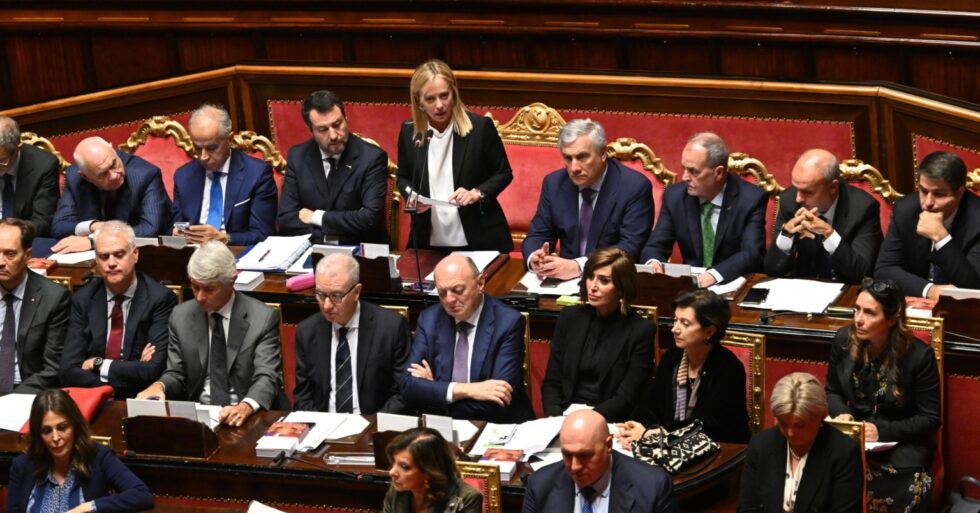
The image is taken from the photographic archive of the ANSA agency, author Claudio Ferri.